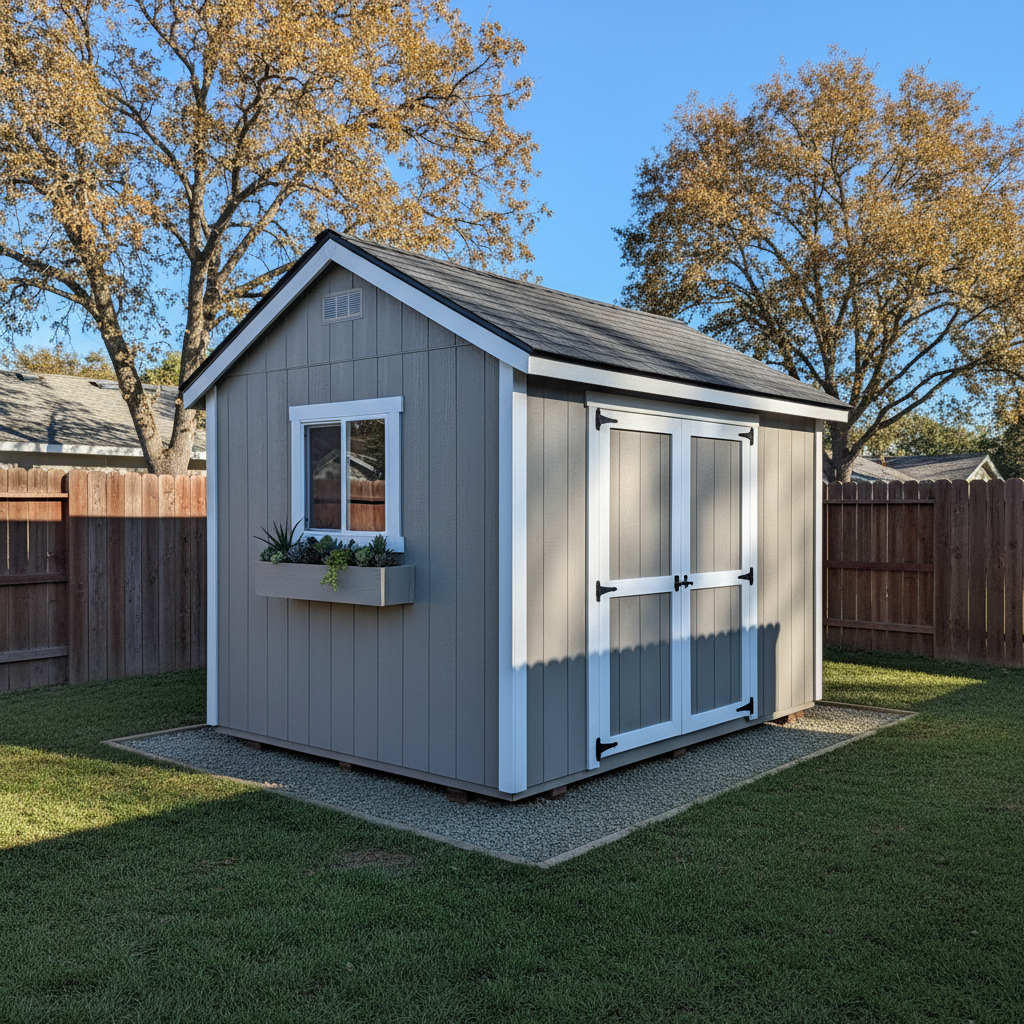
Shed Delivery & Installation Costs: What You'll Actually Pay in Oakdale
So, you've finally picked out that new shed. Awesome! Now comes the next big question: what's it really going to cost to get that thing from the lot to your backyard and set up? It's not just about the shed's price tag, you know; delivery and installation are their own separate beasts, and they can definitely add a fair chunk to your total.
I've been doing this for a good long while here in Oakdale, and believe me, I've seen every situation imaginable. What I'm about to tell you isn't some vague "it depends" answer. We're going to dig into real numbers, what makes those numbers go up or down, and how you can make sure you're not getting taken for a ride.
What Makes the Price Tag Go Up or Down?
You'd think moving a shed would be pretty straightforward, wouldn't you? Just pick it up, drop it off, level it. But it's not always that simple. A few key things really hit that final cost:
Shed Size & Weight: This is probably the biggest factor, hands down. A small 8x10 utility shed is way easier to move than, say, a 12x24 two-story workshop. Bigger, heavier sheds often need specialized equipment — think a bigger truck, a shed mule, or even a crane for those really tight spots. That means more labor and more specialized gear, which, naturally, costs more.
Distance from the Dealer: Most shed companies, including us at Oakdale Shed Solutions, offer a 'free delivery' radius, usually somewhere around 20-30 miles. If you're outside that, you'll pay a per-mile charge. For folks out past Knights Ferry or up towards Copperopolis, that can pile up pretty quickly.
Site Accessibility: This one's huge. Is your backyard wide open, or do we have to snake through narrow gates, around fences, past trees, or up a steep slope? Can our truck and trailer get right up to the spot, or do we need to 'mule' the shed a long distance? If we have to take apart a fence and then put it back, or if we need to bring in extra equipment like a shed mule to get it into a tight spot behind your house, that's going to cost more. I've even had jobs where we had to remove a section of a neighbor's fence just to squeeze a 10x12 into a tight backyard in the Valley Home area, and then, of course, put it all back perfectly.
Site Preparation: Is your site already level and good to go? Or is it sloped, uneven, or covered in junk? If we have to do serious grading, clear brush, or haul away old concrete, that's extra work and extra cost. A properly prepared, level pad is absolutely critical for a shed to last.
Foundation Type: Most standard installations involve leveling the shed on concrete blocks or pressure-treated skids. If you're looking for a gravel pad, a concrete slab, or helical piles (especially on those soft, silty soils we sometimes get near the Stanislaus River), that's a separate foundation cost and often means bringing in a different contractor.
Typical Cost Ranges You Can Expect
Alright, let's get down to brass tacks: numbers. Keep in mind these are general ranges for Oakdale and the surrounding areas. Always, always get a specific quote.
Basic Delivery (within 20-30 miles) & Standard Installation: For a typical 8x10 to 10x16 shed, where the site is reasonably accessible and level, you're usually looking at $300 - $700. This covers getting the shed to your property and leveling it on concrete blocks or pressure-treated skids.
Medium Complexity: For larger sheds (10x20 to 12x24), or if there are moderate site accessibility issues (like needing a shed mule for a short distance, or some minor leveling work), the cost can jump to $700 - $1,500. This might include a bit of extra labor or specialized equipment, you know.
High Complexity / Difficult Access: If you've got a really big shed, a long haul, or a truly challenging site (think steep slopes, very tight access requiring fence removal and replacement, or significant site prep), you could be looking at $1,500 - $3,000+. Sometimes, if a crane is needed to lift a shed over a house, that alone can be several thousand dollars, but that's pretty rare for most residential sheds.
Remember, these figures are just for delivery and installation. They don't include the cost of the shed itself or any extensive site work like pouring a concrete slab.
What Should Be Included in Your Quote?
When you get a quote, make sure it's super clear about what you're actually paying for. A good quote from a reputable company should spell out:
Delivery Fee: Is it part of the package, or is there a separate charge based on distance?
Installation/Setup Fee: What exactly does this cover? Usually, it means placing the shed, leveling it, and making sure doors and windows work right.
Foundation Materials: Will they provide the concrete blocks or skids? Most good companies include this in their standard install, thankfully.
Site Preparation: If they're doing any, what exactly are they doing? Clearing, grading, etc. This should be itemized, no question.
Any Special Equipment: If they need a shed mule or other specialized tools because of your site, this should definitely be noted.
Permits: Clarify if they handle permits (unlikely for just delivery/install, but it's always good to ask) or if that's your job.
Warranty: What's their warranty on the installation? A good company stands behind their work, right?
Don't Overpay: My Advice
Here's how you can keep your costs down and avoid any nasty surprises:
Be Honest About Your Site: When you're talking to a shed company, give them the full picture of your backyard. Send photos or even a video. The more information they have upfront, the more accurate their quote will be. Nothing drives up costs like unexpected challenges on delivery day, believe me.
Prepare Your Site Yourself: If you're handy, clear the area, remove obstacles, and get the ground as level as possible before they arrive. Even a little bit of DIY site prep can save you hundreds.
Get Multiple Quotes: Don't just go with the first guy. Get at least two or three detailed quotes. Compare what's included, not just the bottom line. Sometimes a slightly higher quote includes things that would be extra with a cheaper one, you know?
Ask About Hidden Fees: Specifically ask,