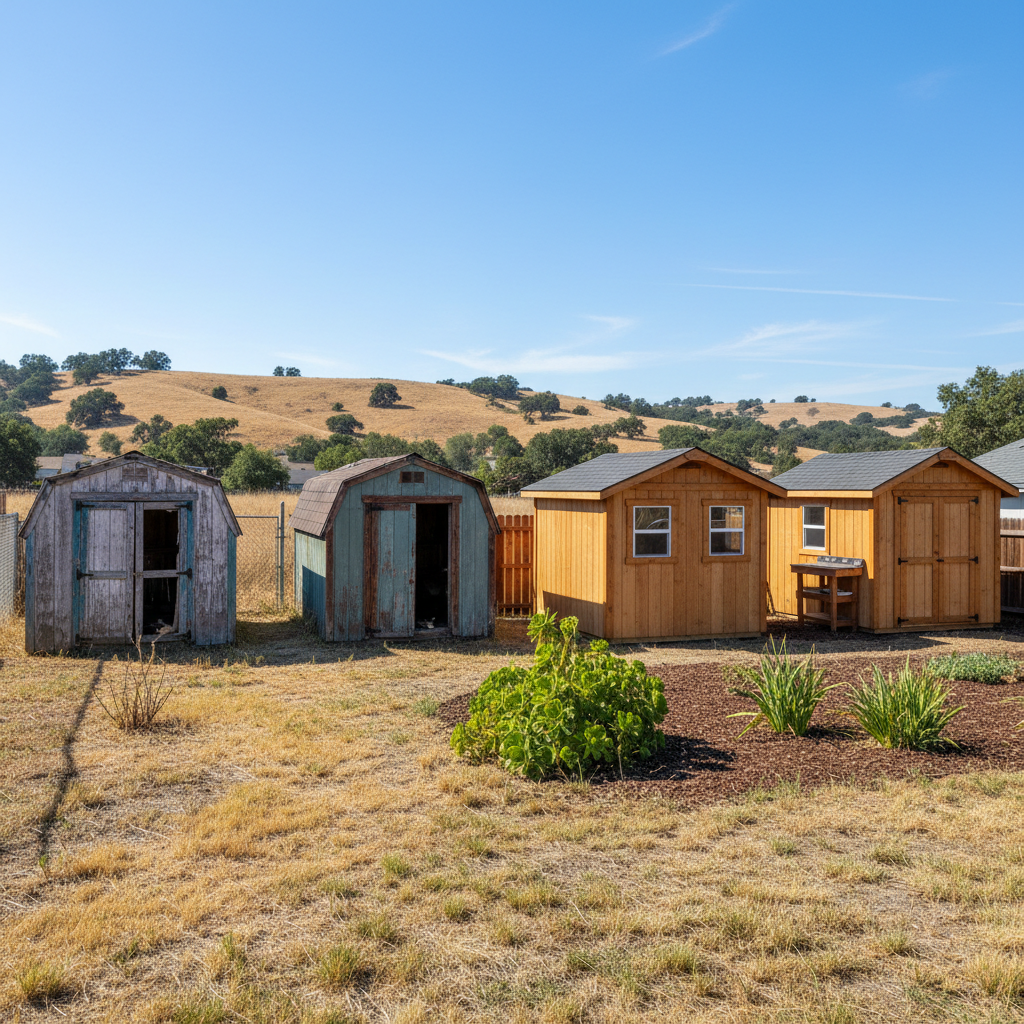
So, you need a new shed for your garden tools, holiday decorations, or maybe just to clear some clutter out of the garage. You've probably thought about wood sheds, but what about the other common options? Today, I want to talk about metal and resin sheds. Both are popular choices, especially for folks looking for something a bit more budget-friendly or less work than a traditional wood structure. But they're definitely not the same, and knowing the differences can save you a real headache down the road.
Cost: What You'll Pay Upfront
Let's be real, price is usually the first thing on anyone's mind. Generally speaking, resin sheds tend to be a little pricier than metal ones, especially when you compare similar sizes. You can find some really cheap, thin metal sheds out there that'll cost you less than a few hundred bucks. Resin sheds usually start a bit higher, maybe $400-$500 for a small one, and they go up from there. The thicker, more robust resin models with better features can easily run you over a thousand. Metal sheds, when you get into the heavier gauge steel, can also climb in price, but often still come in a bit under a similar quality resin shed.
Keep in mind, these are usually for kits you assemble yourself. If you're not handy, you'll need to factor in assembly costs, which can be significant for either type.
Durability & Weather Resistance: Standing Up to Oakdale
This is where things get interesting, especially in our neck of the woods. Oakdale weather can be pretty demanding, right? We get those scorching summers, sometimes hitting triple digits, and then the chilly, damp winters. Wind can whip through, too.
Metal sheds, typically made from galvanized steel, are tough. They resist impacts pretty well. The big concern with metal is rust. Even galvanized steel can eventually rust, especially if the paint gets scratched or chipped. Once rust starts, it can spread. Another thing I've seen is that in our intense summer sun, cheaper metal sheds can get incredibly hot inside, baking whatever you store. They can also be noisy in the wind or hail. On the flip side, they're generally fire-resistant, which is a plus around here.
Resin sheds, made from high-density polyethylene (HDPE), don't rust, rot, or get eaten by termites — a huge advantage. They're also pretty good at resisting dents. The main enemy of resin is UV radiation from the sun. Over time, cheaper resin can become brittle, crack, and fade. You'll see this with older plastic patio furniture, too. Better quality resin sheds have UV inhibitors mixed into the plastic, making them much more resistant to our harsh sun. They also tend to insulate a bit better than single-wall metal, keeping the interior a little cooler in summer and warmer in winter. They're not completely fireproof, but they generally burn slowly.
Maintenance: Keeping It Looking Good
Neither metal nor resin sheds demand a ton of maintenance, which is a big part of their appeal.
- Metal Sheds: You'll want to inspect it annually for any scratches or chips in the paint. Touch these up immediately with rust-inhibiting paint to prevent rust. Keep the gutters (if it has them) clear. That's about it.
- Resin Sheds: These are even simpler. A good wash with soap and water once a year will keep it looking fresh and remove any dirt or mildew. No painting, no rust treatment. Just make sure to keep an eye on any seals around doors or windows to prevent leaks.
For the low-maintenance crowd, resin definitely has an edge here, provided you buy a good quality one that won't degrade in the sun.
Appearance: Blending In or Standing Out?
Let's be honest, nobody wants an eyesore in their backyard. Metal sheds often have a very utilitarian, industrial look. They come in basic colors like gray, green, or brown. Some newer models try to mimic wood grain, but it's usually pretty obvious it's metal. If you're going for purely functional storage and don't care much about aesthetics, metal is fine.
Resin sheds have come a long way. Many are designed to look more like traditional wood sheds, with textured surfaces, shingle-style roofs, and even window details. They often come in more appealing colors and can blend into a garden setting much better. If curb appeal is important to you, a quality resin shed is often the more attractive choice.
My Takeaway for Oakdale Homeowners
Considering our specific conditions here in Oakdale – the intense summer sun, the potential for rust with damp winters, and the desire for something that lasts – I generally lean towards a good quality resin shed for most homeowners. The lack of rust, resistance to rot and termites, and better aesthetic options make it a winner for me.
You'll pay a bit more upfront for a decent resin model, but you're buying something that will last. You won't be out there touching up rust spots, and it'll withstand our UV rays much better than a cheap metal shed. Just make sure you're getting one with UV protection built-in. If you go for the absolute cheapest resin shed you can find, you might be disappointed in a few years when it starts to look faded and brittle.
Now, if you just need super basic, temporary storage and budget is your absolute top priority, a simple metal shed can get the job done. But for long-term storage that holds up to our climate and looks good doing it, I think resin is the smarter investment. And hey, if you ever decide you want something custom-built from wood, you know where to find us at Oakdale Shed Solutions. We build 'em to last.